

Pilates is everywhere on our social media feeds: TikTok, Instagram, Facebook. Studios are popping up on every corner, competing with minimalist decor, dimmed lighting, and rows of Reformers. But with this growing selection, how do you choose between the fitness style with its Megaformers, studios focused solely on the Reformer, and the classical or contemporary approach?
This discipline, which is experiencing a true explosion today, actually has 100 years of history. Beyond the trend, Pilates remains an intelligent functional training system. It requires concentration, control, centering, fluidity, and precision, all combined with breathing.
Here is a simple guide to help you choose the studio that is right for you.
1. Classical Pilates: Authenticity and Rigor
Created by Joseph Hubertus Pilates in the early 1920s (and originally called Contrology), this method is a series of floor and apparatus movements that flow together to work the entire body through all movements of the spine.
- What is it? It is the original method. It respects the logical and sequential order of the exercises, including transitions and breathing.
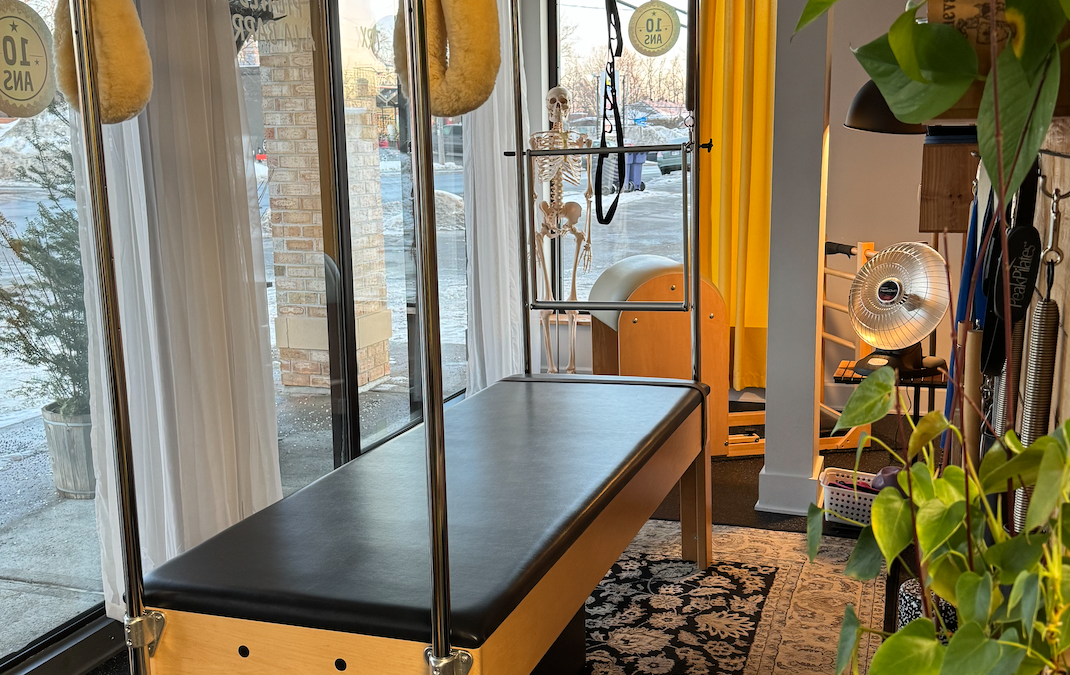
- Why does it work? Each movement prepares the body for the next. The full range of apparatus (Reformer, Tower, Chair, etc.) is used to balance deep muscles. Each piece of equipment has a specific purpose and is an integral part of the method.
- What we do here: We advocate this approach for its overall benefits on the body and posture. In our studio, every participant receives individual attention thanks to our small groups limited to 5 people. This allows for better concentration and deep work. Classical Pilates is absolutely for everyone.

2. Contemporary Pilates: Scientific Evolution
- What is it? It is an evolution of the method. It retains the core principles of Pilates but integrates the latest research in biomechanics and physical therapy.
- Who is it for? It is an excellent method for those who like variety. The classical order of exercises is modified to adapt to individual needs, and small accessories (balls, resistance bands) are often added. It is perfect for anyone wishing to start gently.
3. The New Wave “Fitness Pilates”
- What is it? These are highly athletic workouts inspired by Pilates, often done in large groups, sometimes in heated rooms, in the dark, or on high-resistance hybrid machines.
- What you need to know: It is ideal for sweating, burning calories, and building muscular endurance. On the other hand, the fast pace and large group sizes (often 12 to 20 people) do not allow for the rigorous postural correction needed to protect the back or joints. Here, the Reformer is used primarily as a standard gym machine.
In Summary: Which Style is Right for You?
Each approach brings its own benefits depending on your goal:
- Classical: Choose this if you are looking for a proven method focused on posture, precision, and lasting results.
- Contemporary: This will be your best option if you prefer a more modern and diversified approach.
- Fitness Pilates: This will meet your expectations if you are aiming for cardio, sweat, and muscular challenge (just keep in mind that the core principles of the method are often missing).
Ready to feel the difference?
Whether you want to try classic Pilates in a small group of five or wish to launch your career by taking the PEAK Pilates instructor training, our studio is here to support you.
Would you like to try out a class with us? Simply follow this link and sign up for the class of your choice.
#PeakPilates #FormationPilates #DevenirProfDePilates #PilatesClassique #StudioPilates